
This is aimed at improving liquidity in all schemes and would help them to meet sudden redemption pressures, said Sebi chairman Ajay Tyagi.

Edible oil major Adani Wilmar Ltd (AWL) on Monday filed the draft red herring prospectus with markets regulator Sebi for an initial public offer to raise up to Rs 4,500 crore. The company, which sells cooking oils under the Fortune brand, is a major player in the edible oil industry.

Companies providing portfolio management services (PMS) had a tough time beating the benchmark index in January, with more than half of the schemes invested in large companies underperforming in the run-up to the Union Budget. The Nifty 50 index was down 2.5 per cent during the month. Only around 44 per cent of PMS schemes did better, among the schemes investing in large-cap companies. The analysis is based on data from industry tracker PMS Bazaar. Half the mid-cap schemes outperformed, while the rest underperformed.

For the banking system a new cycle starts in FY2024. It's fraught with fresh challenges on asset quality and profitability, warns Tamal Bandyopadhyay.

While experts' views are divided, the move is aimed at improving the coordination between the government and the regulator.

They researched their companies well, didn't believe in the market chatter and advise to stay invested for long term.

Many banks' profits will take a hit and a few of them could even end up being in the red because of treasury losses, triggered by a sudden spike in government bond yields in the rising interest rate cycle, notes Tamal Bandyopadhyay.

Sinha started his tenure at Sebi a bit shakily making people wonder if he'd complete his three years. Eventually, he went on to stay twice that long.

India's Gross Domestic Product (GDP) is expected to expand by 9.2 per cent in the current financial year, according to the Economic Survey 2021-22 tabled in the parliament on Monday. "Advance estimates suggest that the Indian economy is expected to witness real GDP expansion of 9.2 per cent in 2021-22 after contracting in 2020-21. "This implies that overall economic activity has recovered past the pre-pandemic levels," Economic Survey noted. Almost all indicators show that the economic impact of the "second wave" in Q1 was much smaller than that experienced during the full lockdown phase in 2020-21 even though the health impact was more severe, it said.

'It could tempt investors to pick stocks that are not fundamentally sound.'
'If I had to highlight one area that will do well, it is the financial assets -- that is the private sector banks, insurance and mutual funds.'

As lobbying and counter-lobbying intensify, right now, it looks like a T20 match, discovers Tamal Bandyopadhyay.
One fear among regulators is that allowing side pocketing could lead to fund managers taking higher risks. Even in the US, side pocketing is not allowed in mutual funds, only in hedge funds

One thing is for sure: It smacks of the regulator's lack of confidence in the bank's board, points out Tamal Bandyopadhyay.

Chief Economic Adviser K V Subramanian on Wednesday said India is expected to hit a growth rate of 6.5-7 per cent in 2022-23 and accelerate further to 8 per cent in the subsequent years on the back of reforms undertaken by the government. He also said the government is expected to meet the fiscal deficit target of 6.8 per cent in the current fiscal despite pressure on revenue collections.

Why can't we have a sunset clause for the ARCs, which is a global norm? questions Tamal Bandyopadhyay.
But there are challenges, observes Tamal Bandyopadhyay.

New norms are in place to strengthen regulations for this set of lenders which has been playing a critical role in Asia's third largest economy, notes Tamal Bandyopadhyay.

It was because of strong inflows into debt-oriented schemes that saved 2019 from being a "dark-dull year of investing" as inflows into equity funds has dropped this year due to a volatile market.

Before participating in such a scheme, do a detailed background check of the company's credentials, especially if the promised returns are unrealistic.
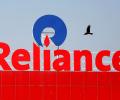
The government is looking to sell shares of Reliance Industries (RIL) held through Specified Undertaking of the Unit Trust of India (SUUTI) and is soon going to appoint an intermediary to manage it. The plan is to sell about 8 lakh shares of RIL that will help the government garner around Rs 180 crore. The Department of Investment and Public Asset Management (DIPAM) will appoint an intermediary that will act as a custodian of these shares. The intermediary, based on its market analysis, will offload these shares at the best price, said an official. A final approval on the proposal is expected soon.

Billionaire Mukesh Ambani's Reliance Industries Ltd has bought Britain's iconic country club and luxury golf resort, Stoke Park, for 57 million pounds (about Rs 592 crore). The acquisition adds to Reliance's current stake in Oberoi hotels and hotel/managed residences in Mumbai that it's developing. Over the past four years, Reliance has announced $3.3 billion in acquisitions with 14 per cent in retail, 80 per cent in technology, media, and telecom (TMT) sector, and 6 per cent in energy. The UK-based firm, which owns a hotel and golf course in Buckinghamshire, UK, will add to Reliance's consumer and hospitality assets, the firm said in a filing late on Thursday.

Chief Economic Adviser (CEA) K V Subramanian on Tuesday exuded confidence that India would achieve double-digit growth in the current financial year on the back of policy initiatives and continuing reforms. He also said the country is well poised to meet the fiscal deficit target of 6.8 per cent of GDP. "At this stage, I can say confidently that we should be able to achieve that fiscal deficit number. "Any shortfalls that might happen on the disinvestment side will also be accompanied by positive surprises that have happened on tax revenue," he told reporters.

This was a fresh probe based on the inspection of certain derivative contracts both on the BSE and NSE.

Flush with liquidity, banks are eager to lend. And, therein lies the problem, warns Tamal Bandyopadhyay.

Bitcoin has been on fire ever since Musk announced that Tesla had bought $1.5 billion of the cryptocurrency, and that his electric-vehicle company would accept bitcoin from buyers.

Sebi had directed some of these companies to wind up their unregistered schemes and repay investors.

FSN E-Commerce Ventures, which runs online marketplace for beauty and wellness products Nykaa, has filed preliminary papers with markets regulator Sebi to raise Rs 3,500-4,000 crore through an initial share-sale.

The industry body has issued two advisories in an attempt to restore jewellers credibility in the wake of the Rs 12,000-crore PNB-Nirav Modi scam, and recent defaults by two domestic jewellers - Goodwin and Rasiklal.

'If you are a smoker, you should not provide misleading information to the insurer about your smoking habit in the insurance proposal form,' advises Pankaj Razdan.

Of the three major Budget announcements related to the banking sector, privatisation of PSBs is the most audacious, says Tamal Bandyopadhyay.

Merely bringing down the government stake below 51% may not find any taker for the PSBs. The government must bring down its holding to at least 26%, recommends Tamal Bandyopadhyay.

'If I close my housing loan, are there any investment avenues (the investment should provide liquidity) to save tax?'

RBL Bank is no Yes Bank. It's not fraught with fraud. It's a story of limitless ambition and greed for growth under a leader who doesn't want to give up, says Tamal Bandyopadhyay.

After the finance minister directed public sector banks to join the account aggregator (AA) ecosystem, 5-6 major ones, including State Bank of India (SBI) and Bank of Baroda are expected to go live by July-end. Sahmati, an industry alliance for the AA ecosystem, has been working with PSU banks to get them onboarded for quite some time now. So far, Union Bank of India and Punjab National Bank (PNB) have gone live on the AA ecosystem. While Union Bank has been live for a while, PNB went live earlier this month.

'I have been advising investors since the last couple of months to at least take their capital out.' 'Most of the people have made 50-60 per cent in the market, if not more, they must at least take their capital out.'

Williams Grand Prix Holdings (WGPH) published results for 2019 showing Formula One revenue slid to 95.4 million pounds ($117.6 million) in 2019, down from 130.7 million pounds the previous year.

While small-caps have delivered higher returns than their large-cap peers, investors would do well to recognise the incremental risk of investing in these companies.

The advisory follows several such 'trading leagues' coming to light, including one by a film star and her husband, wherein the general public is asked to guess returns for some particular stocks and get prizes for right bets, among others.

The government plans to bring down its stake to 26 per cent in these two banks, which are yet to be identified. This may not come in the way of getting investors for these banks, provided the government is willing to step back rather than run them the way it had been doing for over five decades since these banks were nationalised, points out Tamal Bandyopadhyay.
 © 2026 Rediff.com - Advertise with us - Disclaimer - Privacy Policy - Sitemap - Feedback - About us - Terms of use - Grievances